
What the job involves
A basement is the lowest lived-in level in many homes, which is why it's also where EPA and CDPHE say to place a radon test. When that test confirms a reading you want to act on, the usual answer is sub-slab suction. EPA's Consumer's Guide to Radon Reduction calls it "the most common and usually the most reliable radon reduction method."
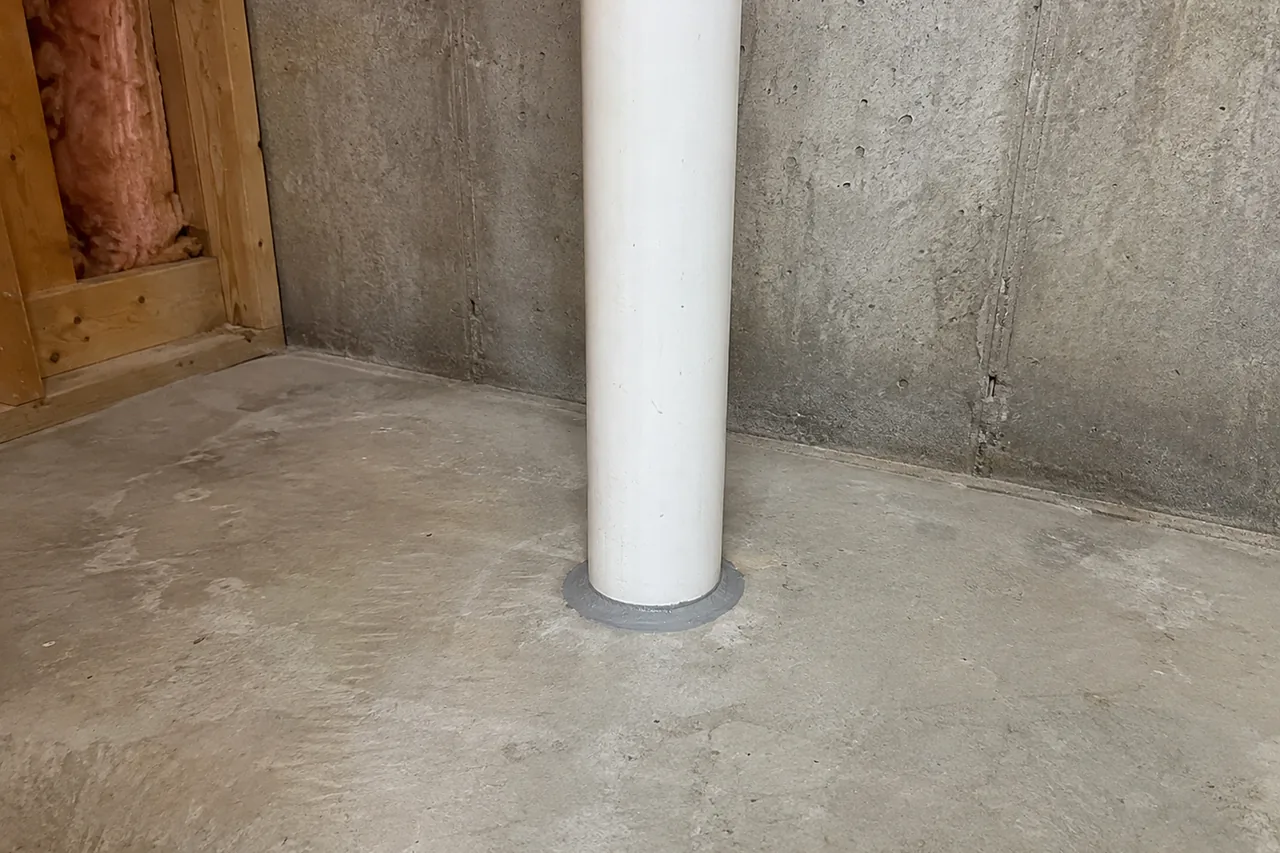
The installer drills through the basement slab, seals a pipe into the hole, and runs that pipe to a fan and an exhaust point. The fan pulls gas from below the floor before it can come up into the basement. EPA says "Often, only a single suction point is needed," and it gives a range of 50 to 99 percent reduction for sub-slab systems. Those are EPA's figures for that method, and nobody can promise your result ahead of time.
Local numbers and your basement
Larimer County's health page lists an area average of 7.8 pCi/L, without a year or sample size. A county presentation gives 7.1 pCi/L across 6,900 existing Fort Collins homes, year not stated. Neither number says anything firm about your basement. Colorado's notes on its own test records warn that tested homes aren't all homes, and that levels can vary widely between neighbors. A test on your house is what counts.
On why the ground matters, the Colorado Geological Survey said its survey results were "strongly influenced by the geologic setting." More on that is on the Larimer County page.
If the basement has a sump
A sump changes the design conversation. EPA says "the sump can be capped so that it can continue to drain water," and that it can also serve as the suction location. Ask these before the work:
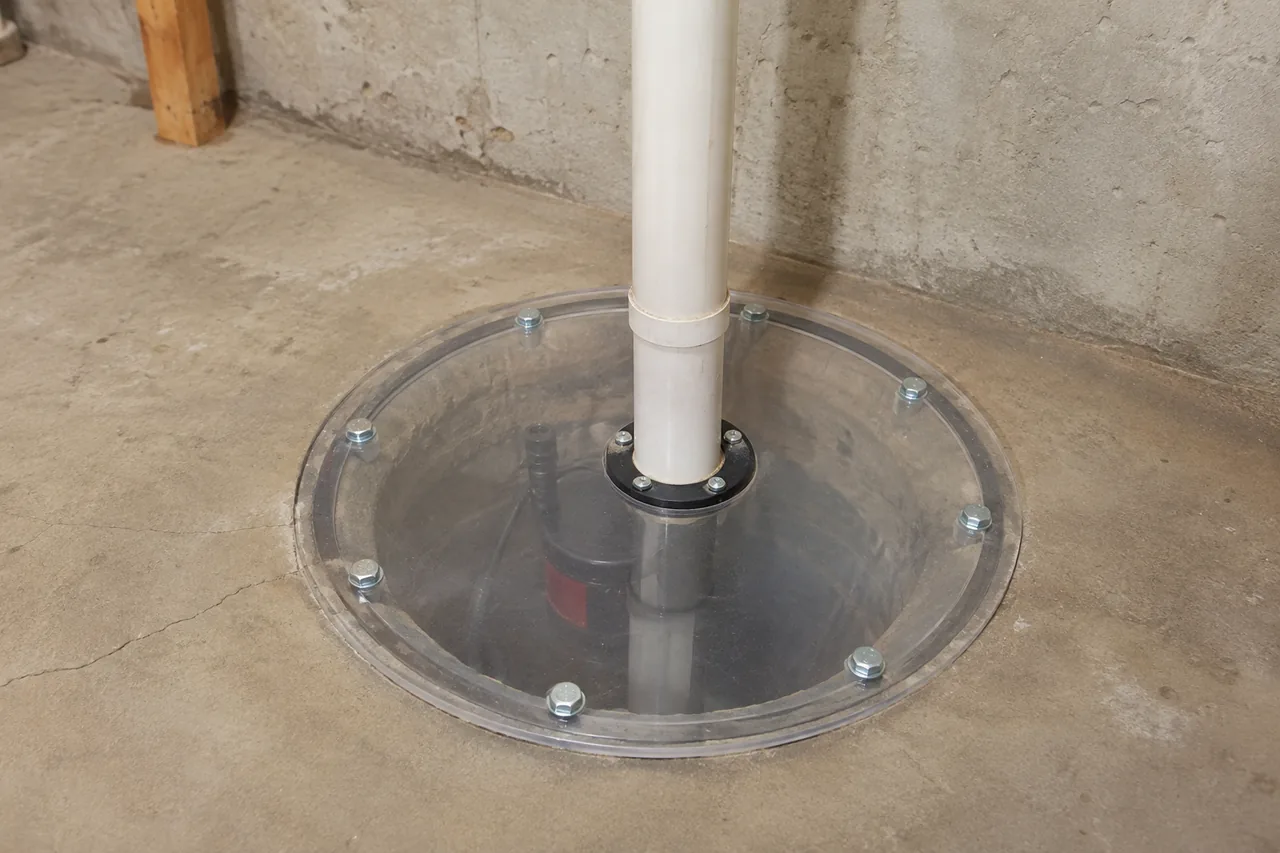
- Will the sump be capped, and how will I get to the pump for service?
- Will the sump be the suction point, or will the suction point go elsewhere?
- How does the design keep the sump draining water?
Drain tile and block walls
EPA's guide describes two more routes for some basements. Drain tile suction uses existing drain tile as the path for pulling gas. Block-wall suction draws from the hollow spaces in concrete block walls. Whether either applies depends on how your basement was built, and that's a question for the contractor's look at the house.
EPA treats pressurization as something to consider only after the common methods, and natural ventilation as a temporary step. If those are the first thing offered, ask why.
Finished basements and pipe routes
A finished basement raises a practical question: where does the pipe go? It could run inside the building up through the house to the attic, or leave through a wall and run up the exterior. EPA confirms attic, garage and exterior fan locations and exhaust at roof level, but no source reviewed here ranks one route over another on looks or price. So, before the job, ask to see where the suction point and the pipe will go, how much finished wall or ceiling work is involved, and who repairs and repaints.
Wherever the pipe runs, two of EPA's rules hold. "The exhaust fan must not be located in or below a livable area," and the exhaust belongs above the roof surface and "10 feet or more above the ground." If it isn't 2 feet above nearby openings, it should be "at least 10 feet away from windows, doors or other openings."
Finishing a basement later
Planning to finish the basement after the test? EPA's advice: "After you remodel, retest in the lowest lived-in area." A newly finished room can become the lowest lived-in level, so an old result from before the work may no longer tell you what you need. If you already have a system, tell whoever finishes the space where the pipe, the fan wiring and the warning device are.
The City of Fort Collins says "Most construction projects require a permit," and adds "Permit exempt does not mean code exempt." That's about construction in general, not radon systems. Permit rules vary, so ask the building department before work begins. Numbers for each town are on the Larimer County page.
What commonly goes wrong
- Sealing as the whole fix. "EPA does not recommend the use of sealing alone to reduce radon," and CDPHE says the same. Sealing can support a system. A national average for professional basement sealing is about $4,600 (Angi and Bob Vila, 2022), and that's not a radon fix on its own.
- A fan in the wrong place. A fan in the basement sits below the rooms above it. EPA says a fan must not be in or below a livable area.
- No way to tell if it stopped. "A warning device must be installed," and "Radon reduction systems must be clearly labeled."
- No follow-up test. EPA says test "within 30 days of system installation, but no sooner than 24 hours," and recommends an independent follow-up test of 2 to 7 days.
- Combustion appliances not considered. If your furnace or water heater burns fuel, bring it up. EPA notes a contractor may recommend you "have the appliances checked by a qualified inspector" for backdrafting.
Cost
Colorado's published figures for a system: $1,000 to $2,000 and about $1,300 to $3,000 on two undated CDPHE pages, and about $1,200 on average, $800 to $2,500 in a state report dated October 15, 2026. These aren't specific to basements and they don't agree with each other. CDPHE says "difficult design problems" push the price up. A finished basement may or may not count as one, so ask. A written quote after a look at your basement is what counts, and the cost guide has the full table.
Who this isn't for
- Homes on a dirt-floor crawlspace. See the crawlspace guide.
- Homes with no test yet. See the testing guide.
- Newer basements with a passive pipe already in. See the passive systems guide before paying for a new suction point.
- Anyone chasing water in the basement. A radon system isn't a waterproofing job. Hire for that separately.
Before you sign
Where the pipe runs through the basement is worth settling early. The hiring guide lists what to ask about it and what the contract should spell out.
Questions homeowners ask
Will sealing cracks in my basement fix it?
EPA says it doesn't recommend sealing alone. It can be one part of a system.
Can the fan go in the basement?
EPA says the fan must not be in or below a livable area. Attics, unconditioned garages and exterior locations are the common spots.
I'm about to finish my basement. Test before or after?
EPA's advice is to retest after a remodel, in the lowest lived-in area. A test before can tell you whether to plan for a system. Ask your builder or contractor how to route around one.
Will it dry out my basement?
No source reviewed for this guide says so. Don't buy a radon system for that reason. Treat water as its own question.
Can a sump stay in use?
Yes, per EPA: it can be capped so it keeps draining.
How this site helps
LarimerRadon.com is a referral service: a request here goes to one independent local contractor, who quotes and does any work directly with you.
Sources
- EPA, Consumer's Guide to Radon Reduction.
- CDPHE, testing page and FAQ (© 2026, undated); state radon dataset notes (undated).
- Larimer County health page (updated Nov 1, 2026); county indoor air presentation (undated).
- City of Fort Collins, Building Permits (read Nov 2026).
- Colorado Geological Survey, geology and the EPA radon study (1991).
- Colorado Department of Regulatory Agencies, radon report (Oct 15, 2026).
- Angi radon cost article (Nov 18, 2022) and Bob Vila radon cost guide (July 29, 2022), for the basement sealing figure only.