
Why a test beats any average
Colorado's health department says radon is "responsible for approximately 500 lung cancer deaths annually in Colorado." You can't see or smell it, so a test is the only way to know what your own house has.
Larimer County's health page lists an area average of 7.8 pCi/L, and the City of Fort Collins says "About half of all Fort Collins homes tested have radon at this level," meaning 4 pCi/L. Neither figure predicts your house. The county gives no year or sample for its average. And Colorado's notes on its own test records warn, "These data do not give us measures of actual radon levels," adding that levels can vary widely between neighboring homes.
EPA's Colorado zone sheet makes the same point: "All homes should be tested, regardless of zone designation."
Reading the number
Readings in picocuries per liter of air (pCi/L)
0 to 8 pCi/L
- 0.4
- EPA: "normally found in the outside air"
- 1.3
- EPA's figure for the average home
- 2 to 4
- EPA: "Consider fixing between 2 and 4 pCi/L"
- 4
- EPA's action level
The health background comes from the agencies: CDC says "There is no known safe level of radon," and calls radon "the second leading cause of lung cancer deaths in the United States." EPA's 4 pCi/L action level is the line it uses for a decision. WHO puts radon at "between 3% to 14% of all lung cancers in a country," a country-level range and not a US figure.
Short-term or long-term
EPA's Citizen's Guide to Radon and Colorado's health department draw the lines a little differently, so here are both, along with the two local kits.
| Source | Short-term test | Long-term test |
|---|---|---|
| EPA | "two days to 90 days" | "more than 90 days" |
| CDPHE | 48 to 120 hours | 91 days to one year |
| Fort Collins city kit | 3 to 7 days | Long-term kit also sold |
| Weld County kit | 3 to 7 days | Not listed |
Whichever kit you buy, follow its own instructions on time. The City of Fort Collins warns "Short-term test kits are time sensitive," so don't leave one sitting.
How to run the test
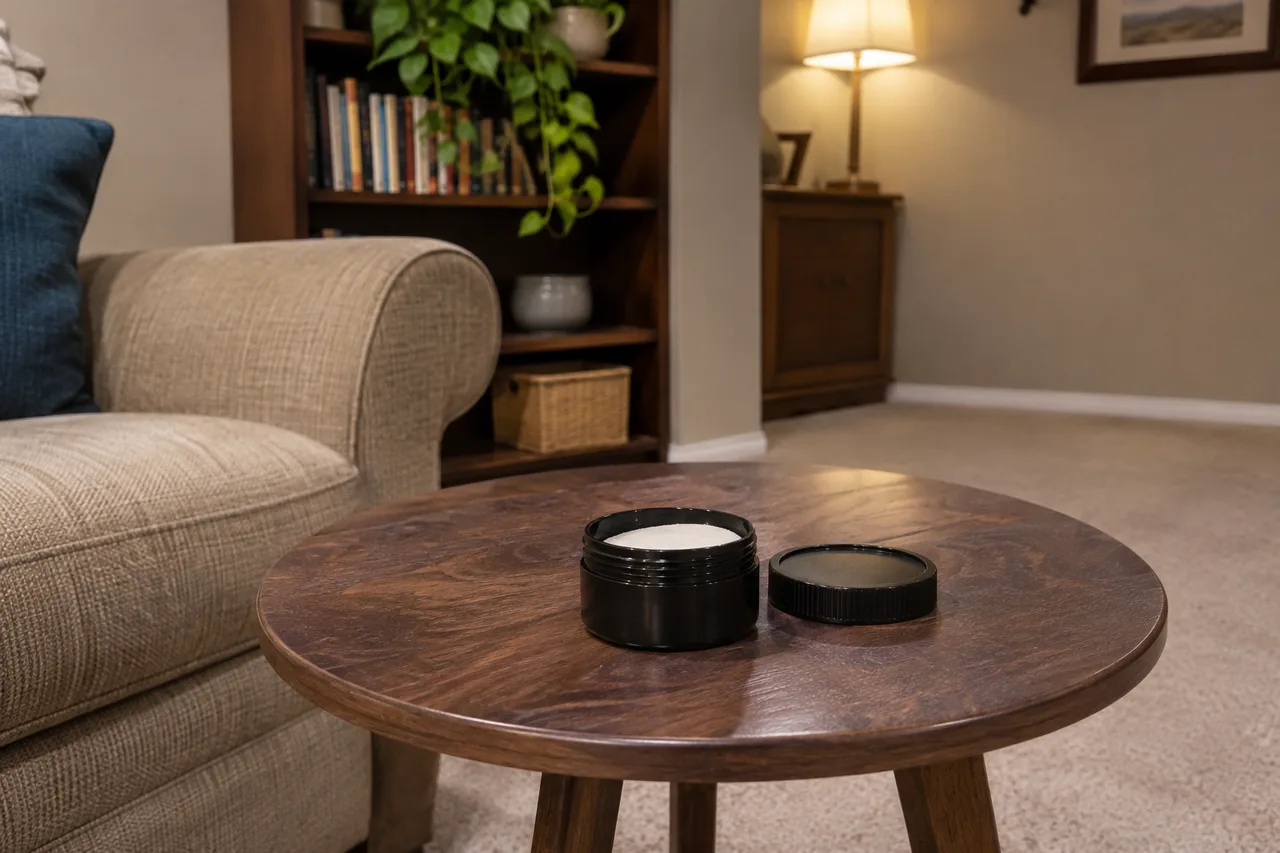
- Pick the spot. EPA says the lowest lived-in level, in a regularly used room, at least 20 inches off the floor. CDPHE says the lowest inhabitable level, on a surface 2 to 7 feet high. Both agree on the level, and a surface at least 2 feet high fits both.
- Close up the house. CDPHE says "Close all exterior windows and doors 12 hours before starting the test," keep them closed during it, and turn off whole-house fans. EPA adds that fans bringing in outside air shouldn't run.
- Run it for the full time. CDPHE says "The test should run for a minimum of 2 days (48 hours)."
- Send it in on schedule. Follow the kit's mailing instructions.
A professional test is another route. CDPHE's FAQ puts it at about $150. Bob Vila's national guide says $150 to $800 (July 29, 2022). LawnStarter's 2024 national guide lists professional short-term testing at $185 and long-term at $190, and a much higher $310 to $1,420 range that appears to include other work. So the published figures don't line up.
Where to get a kit here
| Who | What the source says | Check first |
|---|---|---|
| Fort Collins residents | The city's page lists discounted kits at the Senior Center, 1200 Raintree Dr.: short-term $6, long-term $20. People outside city limits are pointed to the state. | Healthy Homes, 970-416-2832: ask if the price is current |
| Larimer County residents | The county has offered free kits with prepaid postage, most recently in January 2026 "while supplies last," at both county health offices, Estes Park Town Hall, Red Feather Lakes Library and Berthoud Community Library (236 Welch Ave), and online. | Call the county at (970) 498-7000 or CSU Extension at (970) 498-6000 and ask what's available now |
| Weld County residents | Free short-term kits: "one per household, while supplies last." | Weld County, (970) 400-4000 |
| Anyone in Colorado | CDPHE supplies kits. Larimer County's page says they're free for a limited time, while CDPHE's testing page calls them discounted, so check before you order. | CDPHE, 303-692-2000, or its testing page |
| Store-bought | CDPHE says "available at home improvement stores from about $10 to $50." A state report dated Oct 15, 2026 says "Test kits typically cost less than $25." | Check whether lab analysis is included |
What to do with the result
CDPHE's guide below is written for do-it-yourself short-term kits.
EPA's order is a short-term test first, then a long-term or second short-term test, then a decision. EPA's guide treats a first short-term result over twice 4 pCi/L differently, so read that step in the Citizen's Guide if that's your number. CDPHE's FAQ lays out the next step like this:
| Result | No system in the house | System in the house |
|---|---|---|
| Under 2 pCi/L | Retest in 5 years | Retest in 2 years |
| 2 to 3.9 pCi/L | Consider a long-term test or retest in 5 years. Mitigation is an option if someone in the home is at high risk. | Consider a long-term test or retest in 2 years |
| 4 pCi/L or higher | Confirm, then mitigate | Contact a mitigation professional |
If you have a system, EPA's Consumer's Guide adds "It is a good idea to retest your home at least every two years," and "After you remodel, retest in the lowest lived-in area." That applies to finishing a basement. After a new system goes in, test "within 30 days of system installation, but no sooner than 24 hours."
What goes wrong with tests
- Treating a neighbor's result as yours. See the note on neighboring homes above.
- Leaving windows open. Closed-house conditions are part of CDPHE's instructions.
- Testing the wrong floor. Both agencies say the lowest lived or inhabited level.
- Letting a short-term kit sit. Fort Collins warns that these kits are time sensitive.
- Testing air and forgetting a private well. CDPHE says to test water too if you're on a private well with an air problem. EPA says "A radon in water problem is more likely when its source is ground water."
Who this page isn't for
If you already have a confirmed high result, skip to the mitigation guide. If you're in the middle of a sale, the home sale guide is the better start. And this site doesn't sell kits or test homes; it only refers mitigation requests to one independent local contractor.
If the result means hiring someone
The hiring guide lists what to ask a mitigation contractor about the job.
Questions homeowners ask
Can I test during a home sale?
Yes. Colorado's sale contract language strongly recommends it. See the home sale guide for what a seller shares and what a broker or attorney should answer.
Is 3 pCi/L worth fixing?
EPA says consider it. CDPHE suggests a long-term test or a retest in 5 years. Your household can weigh that against EPA's and CDC's statements above.
My house is new. Do I still test?
Yes. A pipe from the builder doesn't tell you the reading. The passive systems guide covers what to do next.
My neighbor's test was low. Can I skip mine?
Colorado's data notes say readings can vary widely between neighboring homes. Test your own house.
How often do I retest?
Use the table above. Without a system it runs on a 5-year cycle for lower readings. With a system, EPA and CDPHE both use two years, and EPA adds a retest after any remodel.
How this site helps
LarimerRadon.com is a referral service: once you have a reading you want to act on, a request here goes to one independent local contractor, who quotes and does any work directly with you.
Sources
- EPA, A Citizen's Guide to Radon and Consumer's Guide to Radon Reduction; Colorado radon zone sheet.
- CDC, About radon (June 18, 2026). WHO, Radon and health (Jan 25, 2023).
- CDPHE, testing page and FAQ (© 2026, undated); state radon dataset notes (undated).
- Larimer County health page (updated Nov 1, 2026); county kit release (Jan 7, 2026); CSU Extension in Larimer County (Aug 29, 2025).
- City of Fort Collins radon page (undated, © 2026). Weld County radon page (undated, © 2026).
- Colorado Department of Regulatory Agencies, radon report (Oct 15, 2026).
- Bob Vila radon cost guide (July 29, 2022) and LawnStarter radon cost guide (2024), for professional test prices only.